Wednesday, October 5, 2016

Victoria & Albert Museum

We had a special showing of samplers this morning at the Blythe House which is part of the V&A (Victoria & Albert Museum).


This first is an English or Scottish sampler from 1749.


This is from Vierlande, Germany and was made in 1807.


This one was unfortunately covered with plastic and there were overhead florescent lights and bright windows so the photo isn't too good. It is from England and was stitched between 1600 and 1650.


This is from Spain and was made in 1775.


This is an English one from 1673 (in 2 parts).


This next one is a very large 19th century sampler from Morocco.


The next two are both Mexican samplers. The first is from 1870 and the second from 1860. The colorful stitch used along the top and right side of the first sampler (in addition to other places) is called the Aztec Stitch. It is also used on the second sampler just to the left of the central animal.


This large one is Spanish from the 18th century.


This stumpwork piece is English from 1665.


Next up is an Italian whitework sampler from 1600-1650 (with a plastic cover).


This sampler was made in Germany in 1884.


And this partlet (panel worn to fill the low-cut front of a gown) is English from 1605-1620.


As a special treat we got to see this 400 year old English jacket.


Tuesday, October 4, 2016

Hampton Court Palace & the RSN

Big day today: we visited the RSN (Royal School of Needlework) at Hampton Court Palace. We enjoyed an excellent talk by the Chief Executive, Dr Susan Kay-Williams, on the history of the RSN, some of the amazing work done by its students, and its current programs. We also had a tour of the current exhibit. No photography was allowed at the RSN so I have no embroidery pictures to show but I did take a few of the Palace and gardens.


The clock was installed in 1540 on the gatehouse to the inner court. This pre-Copernican and pre-Galilean astronomical clock is still functioning.

The clock is 15 feet (4.6 m) in diameter with three separate copper dials revolving at different speeds and displays the following information:

Hour

Month

Day of month

Position of the sun in the ecliptic

Twelve signs of the zodiac

Number of days elapsed since the beginning of the year

Phases of the moon

Age of the moon in days

Hour when the moon crosses the meridian and thus high water at London Bridge.

The latter information was of great importance to those visiting this Thames-side palace from London, as the preferred method of transport at the time was by barge, and at low water London Bridge created dangerous rapids. [info from Wikipedia]


The decorative brick chimneys were an important part of the 1514 design for the palace. Today it still has 241 of them.


Monday, October 3, 2016

Guildford

Today was the town of Guildford and the Guildford museum. The samplers were, once again, very difficult to photograph.


I love the sun, the butterflies and Adam & Eve on this one.


This next sampler was very big so it is in sections.


We then had a bit of time to wander around Guildford.


The castle was built shortly after the 1066 invasion of England by William the Conqueror.


St. Mary's is the oldest church in Guildford and dates from Saxon times. The present church was probably built of stone around 950. The rest of the church was added in stages over the next three hundred years.


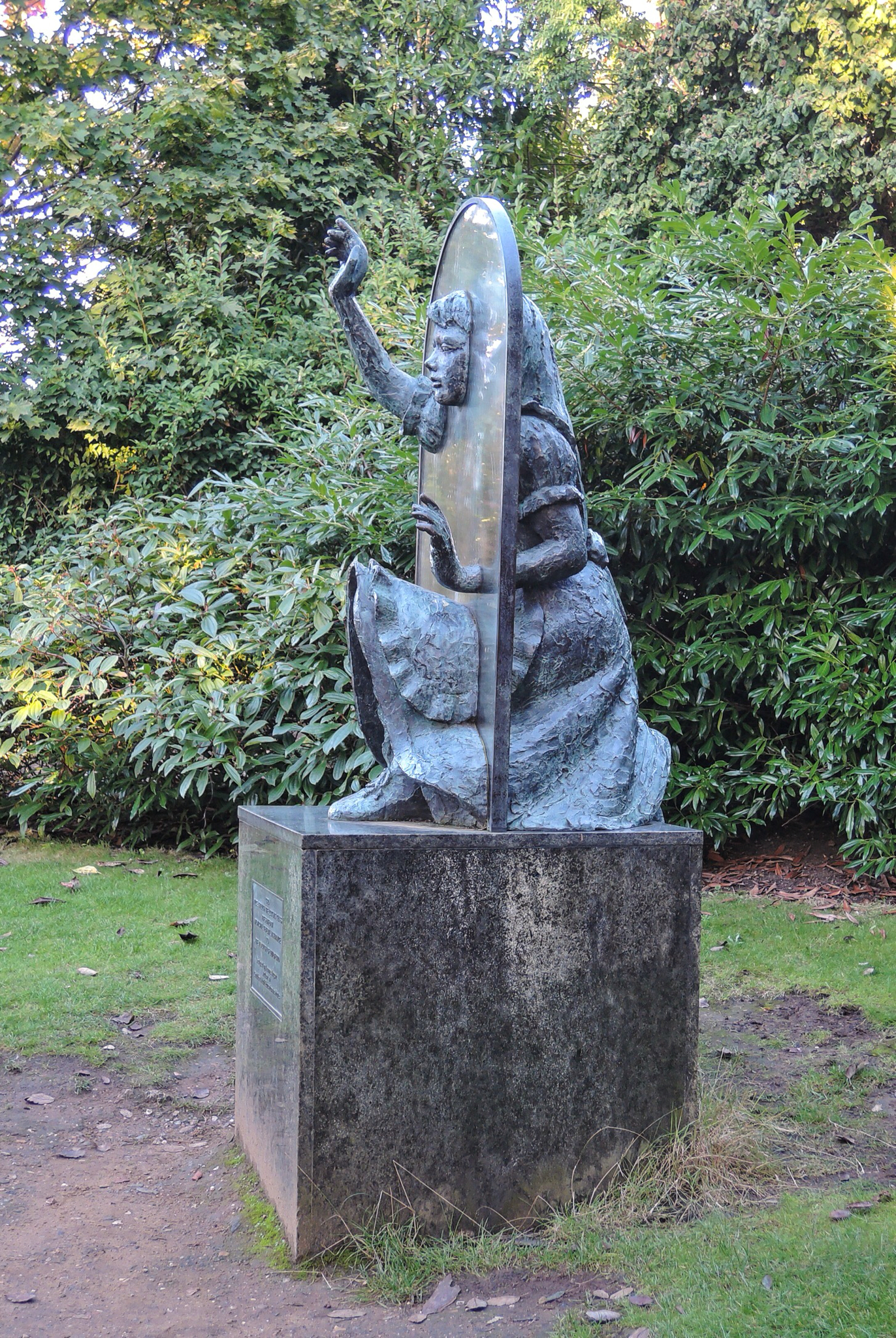
Lewis Carroll, author of "Alices's Adventures in Wonderland', came to Guildford for the first time in 1868 as a clergyman named Charles Lutwidge Dodgson. There are two statues of Alice in town.