Wednesday, October 8, 2014

Ston, Croatia & Mostar, Bosnia-Herzegovina

We stopped for lunch at a town called Ston in Croatia on our trip from Korčula to Mostar, Bosnia-Herzegovina. This was a very interesting place.


A series of defensive stone walls, originally more than 7 kilometres (4.3 mi) long, was built from Ston to Mali Ston to protect the precious salt pans that contributed to Dubrovnik's wealth. The wall, today 5.5 kilometre long, is in the shape of an irregular pentangle. It was completed in the 15th century, along with its 40 towers (20 of which have survived) and 5 fortresses.


Here is a map of the wall.


Here is some of the wall.


This is a picture out the bus window of the wall coming over the hill to Mali Ston.


And for something really fun ....


I bet that smile doesn't last past the first kilometer.


We arrived in Mostar in the late afternoon and had a bit of time to take a few photos.


Tuesday, October 7, 2014

Korčula, Croatia

Today was a free day to wander around Korčula.

Korčula has an interesting layout of streets - the map looks like the skeleton of a fish. The Venetians ruled the island from 1420 to 1797 and built Korcula Town in the 15th century. The builders cleverly took advantage of the windy climate by running the west streets straight to open the city to the westerly maestral winds and curving the east streets to protect the town from the cold, north-easterly bura winds.

Neat idea!


The view of Korčula from our hotel.


Some of the 'bones' of the 'fish'.


The old town wall.


One of the old town gates.


A prickly tower.


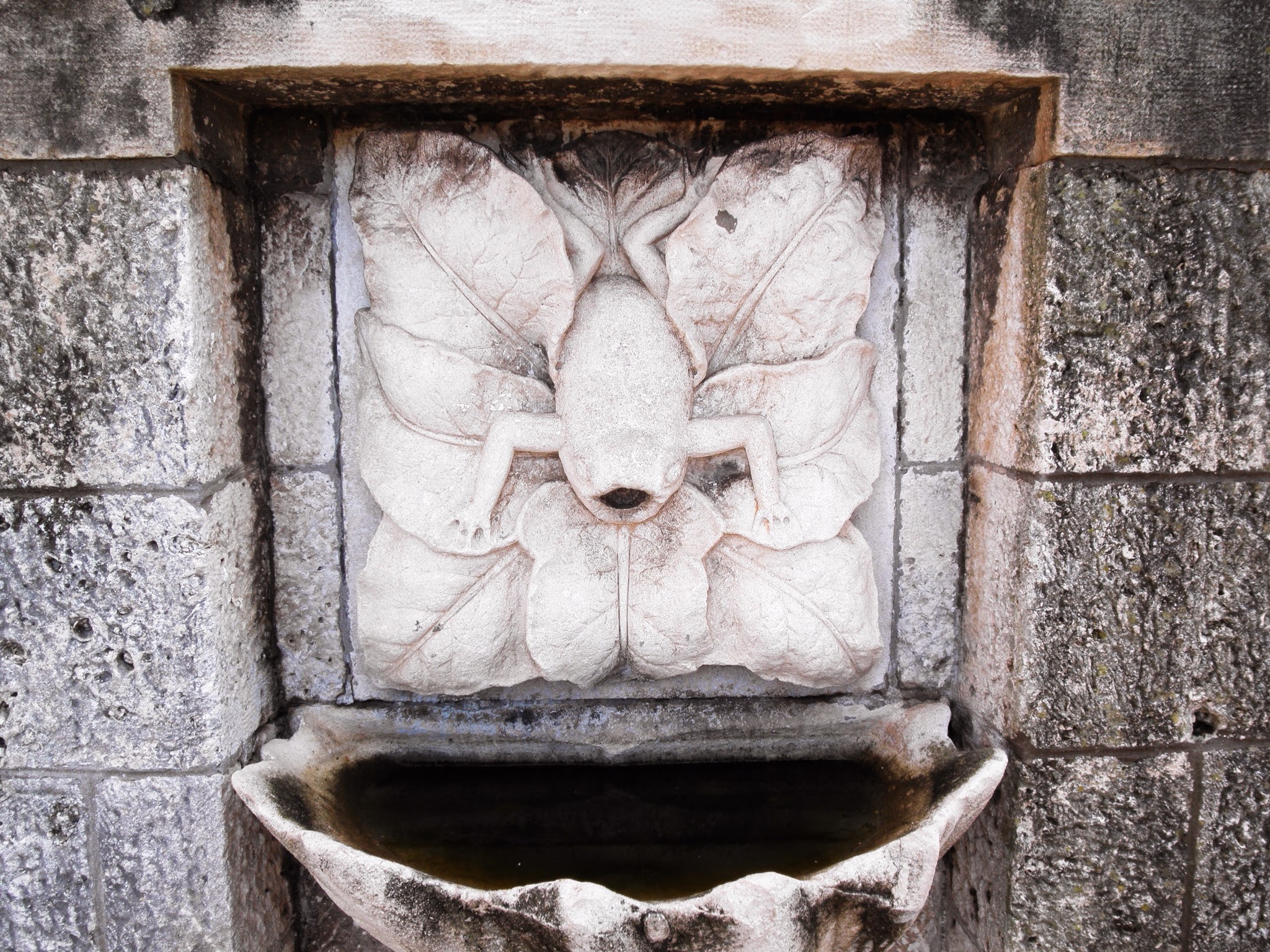
A totally cute frog fountain.


This is probably supposed to be Marco Polo.


And these are some of the unusual decorations on the church.


A view of Korčula from a different angle.


Monday, October 6, 2014

Hvar, Croatia

Today started with a 2 hour ferry ride from Split to Hvar. We then had a few hours to explore Hvar. The main town square has a cathedral, St Stephen's, at one end.


The fortress on the hill and the old town walls probably date from the 14th century.


The view of the town from the fortress is pretty impressive.


The prominade along the waterfront is called the riva.


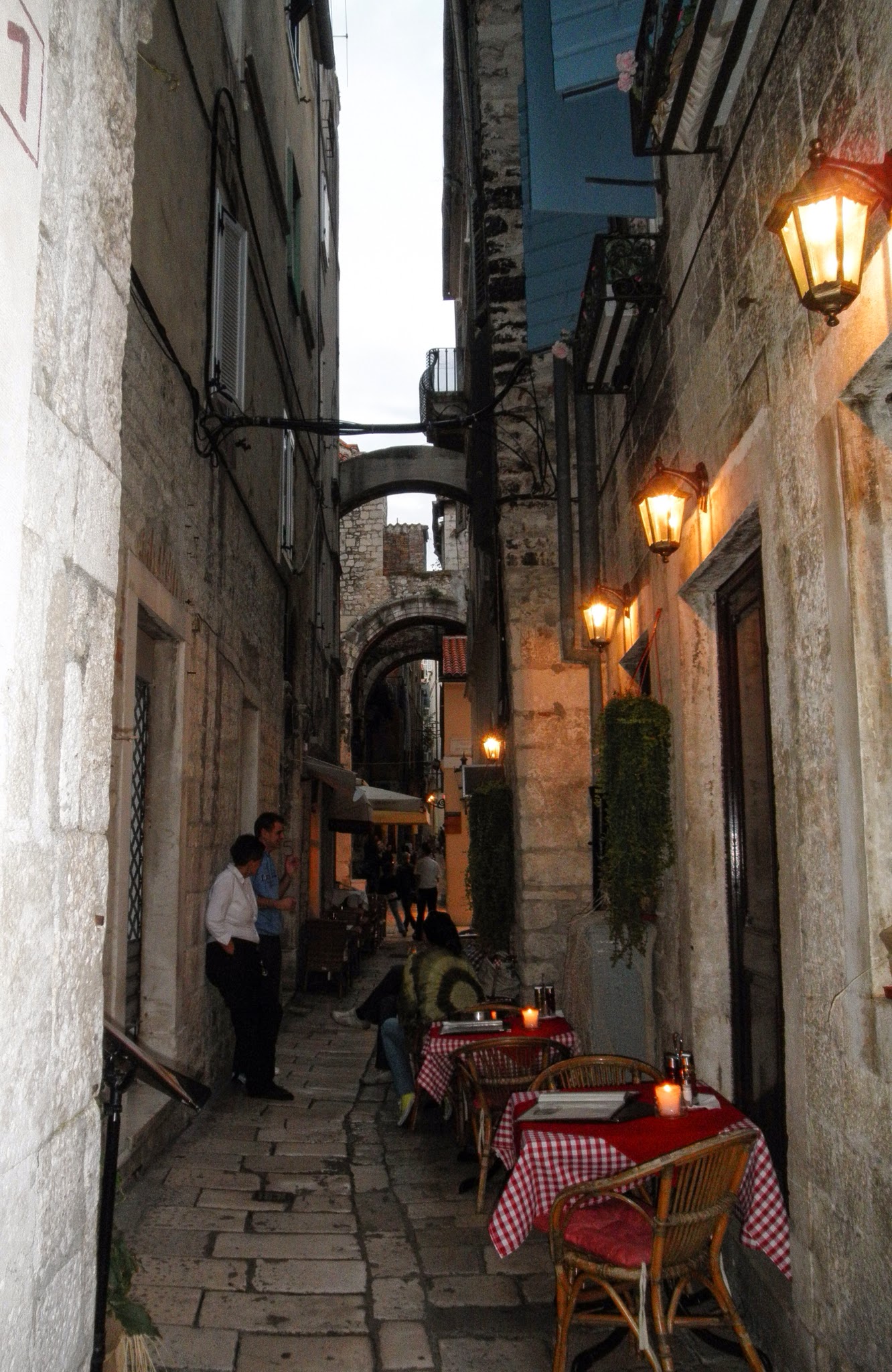
There are lots of tiny alleyways.


Many of them with little restaurants tucked into them.


At 3 pm we took another ferry to Korčula where we will spend the next two nights.


Sunday, October 5, 2014

Split, Croatia

Diocletian's Palace is an ancient palace built by the Roman emperor Diocletian at the turn of the fourth century AD. While it is referred to as a "palace" because of its intended use as the retirement residence of Diocletian, the term can be misleading as the structure is massive and more resembles a large fortress: whereof about half was for Diocletian's personal use, and the rest housed the military garrison. Diocletian built the massive palace in preparation for his retirement on 1 May 305 AD. [thanks to Wikipedia]

Here is an artist's (Ernest Hébrard) rendition of the palace from Diocletian's time.


After the Romans abandoned the site, the Palace remained empty for several centuries. In the 7th century, nearby residents fled to the walled palace in an effort to escape invading Slavs. Since then the palace has been occupied, with residents making their homes and businesses within the palace basement and directly in its walls.


This area is called the Peristil.


Diocletian's former Mausoleum was taken over by the church and changed into the cathedral of St Duje.


This is the bell tower.


The palace has restaurants tucked into all sorts of nooks and crannies.


This area outside the palace walls is called the Republic Square.


And lastly, a view of Split from the water.


Saturday, October 4, 2014

Plitvice Lakes National Park, Croatia

WOW!

Plitvice Lakes National Park (Nacionalni park Plitvička jezera) is the oldest national park in Southeast Europe and the largest national park in Croatia. The park was founded in 1949 and the protected area extends over 296.85 square kilometres (73,350 acres). In 1979, the park was added to the UNESCO World Heritage register as one of the first natural sites worldwide. [thanks to Wikipedia]


No additional explanation is needed.